Current Projects
Kgalagadi Human Origins (KHO) 2021-2027

The Lapa do Picareiro MicroContextual Project (LdP MiCE) 2025-2026
The The Lapa do Picareiro MicroContextual Project applies the innovative MiCE method, which uses a microscribe 3-D digitising tool during laboratory excavation, to deposits rich in microfauna (the remains of rodents, insectivores, and bats) to create well-documented precise records of palaeoenvironmental information at the Pleistocene archaeological site Lapa do Picareiro in Portugal. The project is led by Dr. Sara Rhodes (Interdisciplinary Center for Archaeology and Evolution of Human Behaviour (ICArEHB), University of the Algarve), while team member Dr. Michaela Ecker responsibility is the isotopic components of the project. More information: http://www.icarehb.com/srhodes/


Palaeoecology and Open-Landscape adaptations of Pleistocene humans in South Africa (PEOPLE) 2022-2027
PEOPLE is a five year European Research Council funded project (ERC Starting Grant number 101039711) led by Principal Investigator Dr. Michael Toffolo at the Centro Nacional de Investigación sobre la Evolución Humana (CENIEH) in Burgos (Spain). The project will investigate South African ecosystems with an interdisciplinary approach to assess human response to climate change during the Middle Stone Age (MSA). Dr. Michaela Ecker is involved in the project as a collaborator using plant lipid biomarker stable isotopes extracted from archaeological sediments to explore local environmental changes through time. More information: peopleproject.eu
Testing past ecological corridors with modern climate modelling 2020-ongoing
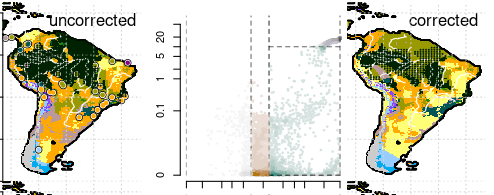
In a collaboration between palaeoecologists, climate modellers and archaeologists this project developed novel methods to combine global climate model data directly with palaeoenvironmental records to model the distribution of vegetation biomes and determine their drivers in the Pleistocene. This data is then used to hypothesis about the spread of animal or human populations at distinct windows in the past. The project is a joint collaboration between Dr. Hiromitsu Sato (University of Toronto, Canada), Dr. Douglas Kelley (UK Centre for Ecology & Hydrology, UK) and Dr. Michaela Ecker. A paper about testing the “refugia hypothesis” for the Amazon during the Last Glacial Maximum is currently in review. The next planned project is modelling corridors for the spread of human population in Africa during the late Pleistocene using archaeological data.
The Northern Cape Archaeology and Ecology Project (NCAEP) 2019-ongoing
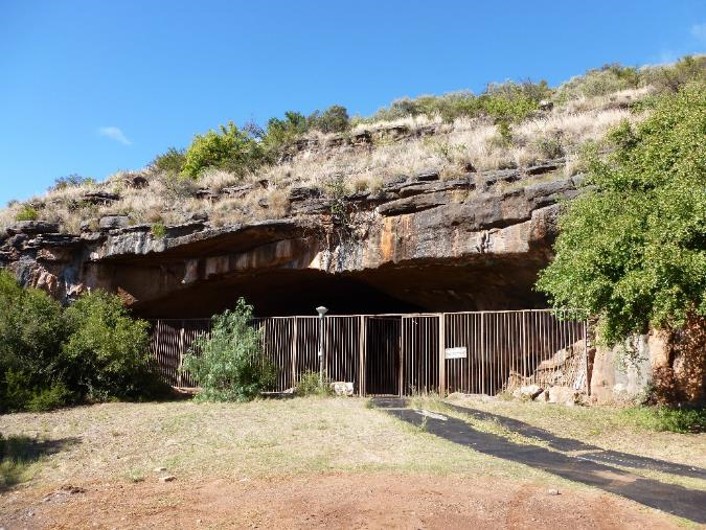
The NCAEP Project is led by Sara Rhodes (Interdisciplinary Center for Archaeology and Evolution of Human Behaviour (ICArEHB), University of the Algarve) and Michael Chazan (University of Toronto). It aims to expand our knowledge on the paleoecological context of the Later Stone Age in the Northern Cape, South Africa. This includes new excavations into the Later Stone Age at Wonderwerk Cave and on the Ghaap plateau escarpment coupled with analysis of new high-resolution paleoecological material records firmly situated in robust radiocarbon chronologies. Michaela Ecker joined the project with the main responsibility of reconstructing the past environment using sediment leaf wax biomarkers. More information: http://www.icarehb.com/srhodes/
Results: Rhodes, S.E., Goldberg, P., Ecker, M., Horwitz, L.K., Boaretto, E. and Chazan, M., 2021. Exploring the Later Stone Age at a micro-scale: New high-resolution excavations at Wonderwerk Cave. Quaternary International. https://doi.org/10.1016/j.quaint.2021.10.004
Wonderwerk Cave Project, South Africa 2013 – ongoing
Wonderwerk Cave currently has the oldest evidence for hominin use of cave sites in the world as well as evidence for use of fire by hominins c. 1 million years ago. Its archaeological layers span almost two million years, resulting in an unique archaeological and sedimentological repository in this arid region.
Michaela Ecker joined the project in 2013 as field director with the main responsibility of setting up of a digital survey system in the cave and database creation and management in addition to her doctorate work in stable isotope biogeochemistry at Wonderwerk. The Wonderwerk Cave research project is lead since 2004 by Michael Chazan (University of Toronto), Liora Horwitz (The Hebrew University Jerusalem) and includes c. 30 international researchers.
Find more information at www.wonderwerkcave.com.

Past Projects
Last Neanderthal and early Homo sapiens occupations in the Bawa Yawan Rockshelter, Kermanshah, West-Central Zagros Mountains (Iran) 2019 – 2023
This DFG funded project is led by Principal Investigator Dr. Saman Heydari-Guran (Neanderthal Museum & University of Cologne). It aims to investigate the site of Bawa Yawan Rockshelter in the Zagros mountains of Iran, which has yielded Middle and Upper Palaeolithic artefacts as well as a Neanderthal tooth. Dr. Michaela Ecker is collaborating with the project using faunal stable isotopes for environmental reconstruction.
Results: Ecker, M., Hariri, N., Heydari-Guran, S., Ghasidian, E., Tuross, N., Zeder, M., Makarewicz, C. 2023. Herbivore enamel carbon and oxygen isotopes demonstrate both Homo sapiens and Neandertals exploited similar habitats in the Zagros Mountains. Journal of Quaternary Science. https://doi.org/10.1002/jqs.3561
Mid-Pleistocene environments of the lower Vaal river (MINERVA), Marie Sklodowska-Curie Project 2019-2021

Modelling of climatic drivers in the summer rainfall zone of southern Africa during the Mid-Pleistocene 2016-2020
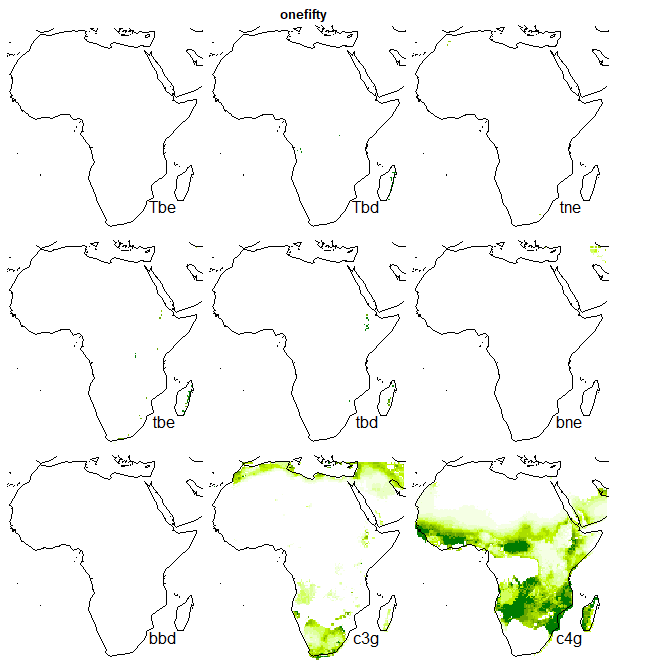
Together with Hiromitsu Sato (University of Toronto, Canada) and Douglas Kelley (Centre for Ecology and Hydrology, UK) we are exploring the possible drivers (CO2, rainfall seasonality, fire) leading to the signals we see in palaeoenvironmental records using climate models.
Results: Ecker, M., Kelley, D. & Sato, H. Modelling the effects of CO2 on C3 and C4 grass competition during the mid-Pleistocene transition in South Africa. Sci Rep 10, 16234 (2020). https://www.nature.com/articles/s41598-020-72614-2
Excavations at Pniel, lower Vaal River, South Africa 2017-2019
Principal Investigators: Michaela Ecker & David Morris (McGregor Museum).
Funded by the Quaternary Research Association (QRA) Quaternary Research Fund; Rust Family Foundation & The Palaeontological Scientific Trust (PAST), Johannesburg, South Africa.
Results: Ecker, M., Bank. C.-G., Chazan, M., Chen, Y., Green, G., Morris, D., Stoikopoulos, N., Shadrach, K., Stratford, D., Duke, H. 2021, Revisiting Pniel 6: the 2017-2019 excavations. South African Archaeological Bulletin 76(214), 57-69.


Ostrich eggshell: preservation, dating and environmental analyses
Ostrich eggshell is abundant in archaeological sites in southern Africa. It is easily recognisable and can be used for palaeoenvironmental analsyis as well as for dating by various methods.
Published results:
Demarchi et al. 2016 in eLife. Project lead by Julia Lee-Thorp (University of Oxford) and Kirsty Penkman (University of York) on amino acid dating and protein diagenesis of ostrich eggshell. https://elifesciences.org/articles/17092
Ecker et al. 2015 in Palaeoecology of Africa. PDF
 Kglagadi Human Origins